SaleSystem / Consultation follow-up
Med Spa Consultation Follow-Up: Help With the Next Step
Someone came to a consultation but left without booking. Before sending another offer, find out what they still need. A clear answer about cost, a better time or space to decide may be the most useful next step.
By SaleSystem · · Operations
After the consultation, not after treatment
This guide is for front-desk follow-up when someone attended a consultation and has not booked the next agreed visit. It is not an aftercare plan. Send medical questions, concerns and treatment decisions to the clinical team through your approved process.
For a first inquiry that has not become a consultation yet, start with med spa lead follow-up. For an attended consultation, use what the person actually asked. Do not restart the same new-lead messages.
Agree on the next step before they leave
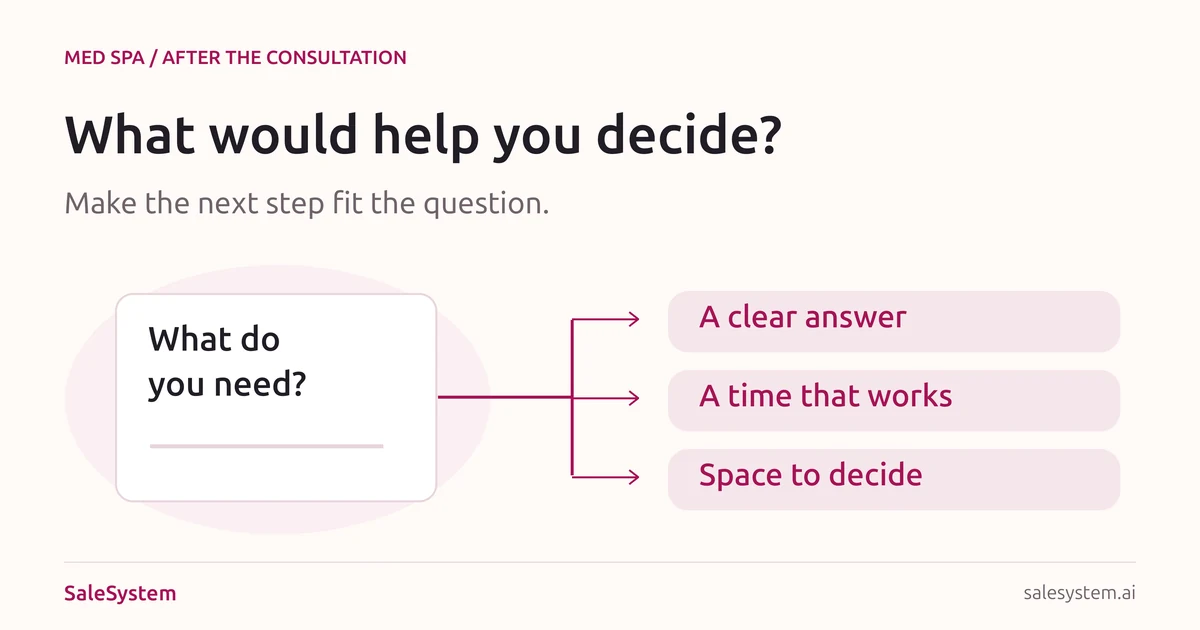
Ask a simple question: “What would help you decide on your next step?” Listen before offering an appointment or sending a link.
- They need a price: confirm who will provide the approved quote and when.
- They need a time: ask which days work and check real openings.
- They need a clinical answer: arrange a reply from the right provider.
- They need space: ask whether they want a check-in or prefer to reach out themselves.
If they want follow-up, agree on the channel and timing. “Call me Friday afternoon” is useful. “Interested” leaves the next shift guessing. Keep the next action with the client record.
Four consultation follow-up scripts
Use these as starting points for a call or a message through a channel the client has agreed to. Keep messages brief and leave private treatment details out of ordinary texts.
When they ask about cost
Hi [First Name], it’s [Name] from [Med Spa]. You asked for help with pricing after your visit. Would you like me to arrange a call to go over your quote?
Use the quote your team approved. Make clear what is included, any deposit and the terms before asking the person to book. Do not invent a discount or promise financing approval to get a yes.
When the timing does not work yet
Hi [First Name], it’s [Name] from [Med Spa]. You asked us to check back about appointment times. Would mornings or afternoons be easier for you?
Ask only for what you need to find a suitable time. Check the schedule before offering a slot. A booking link helps when the client wants to choose for themselves; a staff reply helps when they need guidance with the schedule.
When the question needs a clinician
Thanks for your question. I’ll ask the clinical team to help. What is the best way for them to reach you?
Route the question rather than guessing at an answer. Give it a named owner and a realistic reply time. Do not turn the concern into a sales objection or keep pushing a booking while the person is waiting for that answer.
When they want time to decide
Of course. Would you like us to check in on a day that suits you, or would you prefer to get in touch when you’re ready?
Honor the choice. If they prefer to contact you, leave them a clear way to do it and end the follow-up. Do not add a deadline unless it is real and relevant to their offer.
Choose timing from the conversation
Use the day and time you agreed on. If your team owes an answer, send it when it is ready rather than waiting for a sales sequence. If no plan was made, choose one useful check-in within your contact policy instead of launching a long series by default.
Before any contact, read the latest reply and check the appointment record. Someone may have booked online, called another teammate or asked not to hear from you. Change or end the old follow-up when their plans change.
No reply is not a reason to send the same question every day. Decide where your follow-up ends, close the task and keep the history. For general message-writing tips, see SMS follow-ups that do not feel spammy.
Copy-ready follow-up note
Keep this in the shared client record, not on a public desk sheet. Record only what the next teammate needs to help.
Client record: [Internal link]
Visit status: [Consultation attended; next visit not booked]
Open question: [Price, timing or provider reply needed]
Agreed next step: [One action]
Contact choice: [Agreed channel and time, or no follow-up]
Owner: [Team member]
Done when: [Question answered, booking confirmed or follow-up closed]
Example: waiting for a work schedule
A person wants to choose a time but will not know their work hours until Friday. They ask for a call that afternoon. The desk creates a Friday callback task with a named owner. It does not mark the next visit as booked.
On Friday, the owner checks recent messages and bookings before calling. If the person has already booked, the task is closed or changed to any help still needed. If they ask to wait, staff record that choice instead of moving them back into a new-lead sequence.
Keep the attended consultation and the next booking as separate facts. Our med spa pipeline stage guide helps your team use clear labels.
A quick review for the front-desk lead
- Did every promised answer reach the right teammate?
- Does each callback have an owner and due time?
- Is anyone getting booking messages after they already booked?
- Are clinical questions reaching the clinical team?
- Are requests to pause or stop being honored?
- Does each open task still have a useful reason to exist?
If many people are waiting on price details, improve the quote handoff. If the same time is always unavailable, review booking options. If answers are ready but never reach the client, fix reply ownership. More messages will not solve a missing answer.
Make the next conversation easier
SaleSystem’s med spa CRM keeps calls, texts, client history and tasks together. A teammate can see what was promised and pick up the conversation without chasing another shift.
Use SaleSystem’s follow-up tools for routine messages and staff tasks. Booking and payments are available with the Operations Complete add-on; see med spa plans for the right setup.
Running a day spa instead? Use these same listening and callback steps after a service inquiry. For the end of an attended visit, try our spa rebooking scripts.
Keep every follow-up and reply in one place
Try SaleSystem free for 14 days. Manage your leads, follow up with clients and book appointments in one place.