SaleSystem / Spa rebooking scripts
Spa Rebooking Scripts That Make the Next Visit Easy
A client enjoyed their visit. Now make it easy to come back. These spa rebooking scripts help your front desk offer a next step without pressure, a surprise booking or another discount.
By SaleSystem · · Operations
Ask while you can still help
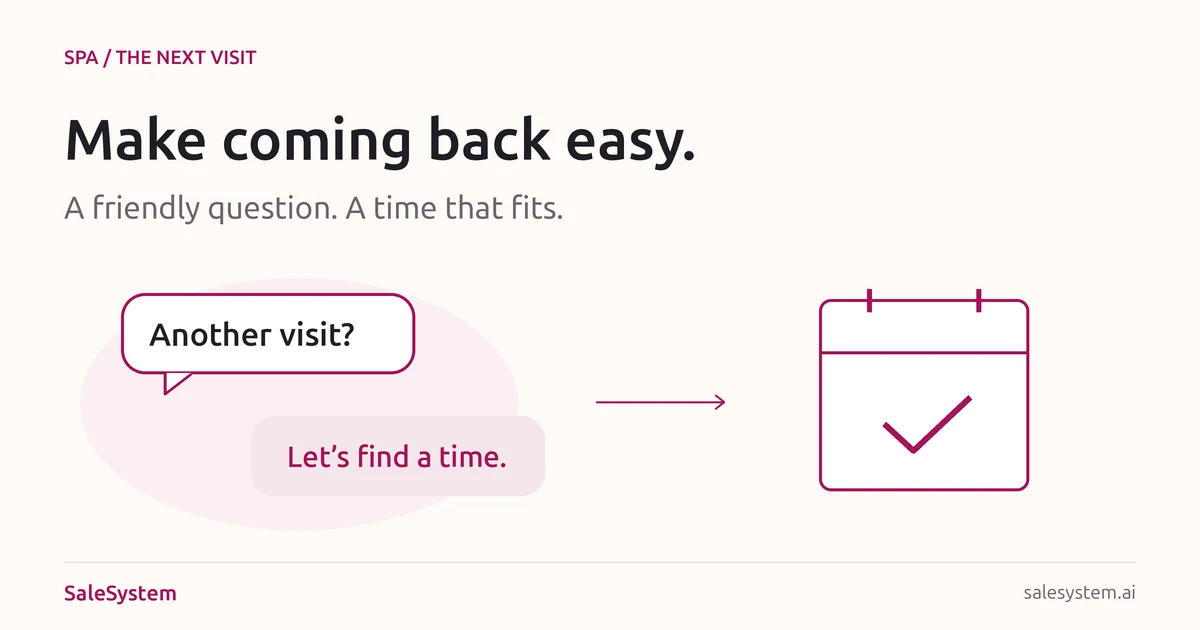
At checkout, ask whether the client would like to plan another visit. You can answer questions, check real openings and save them a call later. Keep the offer short and give them room to decide.
Start with what they want, not a fixed sales line. A regular massage client may want the same day each week. A first-time facial guest may just want to know how to book when they are ready.
Use the service provider’s guidance when timing matters. Front-desk staff should not invent a treatment schedule. For med spas, leave treatment timing and suitability to the clinical team.
Five spa rebooking scripts to make your own
These are sample words, not a speech to memorize. Use the client’s name naturally, check availability first and only offer times you can book.
When the client wants another visit
Would you like to plan your next visit while you’re here? I can check times with [Provider], or we can look at what fits your week.
Let their answer guide the next question. Confirm the service, provider, date and time before saving the booking.
When they need to check their calendar
Of course. Would you like the booking link, or would you prefer to get in touch when you know your schedule?
If they ask for a reminder, agree on when and how. Do not turn “I need to check” into permission for a series of sales texts.
When their favorite time is taken
That time is booked. Would another day with [Provider] work, or would you like me to check a different provider at that time?
Offer real choices. If your spa keeps a waitlist, explain how it works and ask before adding the client. Do not promise an opening you do not have.
When price is the concern
I understand. Would it help to go over the service options and prices, or would you rather leave it for now?
Answer plainly. Share a membership only when its benefits fit the client, and explain the price and terms. A simple “not today” does not call for a bigger pitch.
When they say no
No pressure. Thanks for visiting us. You can book online or call us whenever you’re ready.
End warmly. Do not save an appointment, add a reminder or keep asking after a clear no.
A guest visit is not a failed rebooking
A traveler, gift-card guest or person visiting with a friend may not need a regular appointment. Ask once and listen. Give them a good goodbye instead of treating every visit as the start of a plan.
If they ask for a way to return, make it easy. If not, record only what staff need to know. Your team’s goal is to help a client choose, not to get a yes at any cost.
Copy-ready checkout note
Keep the result with the client record so the next shift does not repeat the same offer. Use a short note like this:
Client record: [Internal link]
Next visit: [Booked / Asked for help later / Not planned]
Client’s request: [Their preferred next step]
Agreed follow-up: [Channel and time, or none]
Owner: [Team member, if action is needed]
Done when: [Booking confirmed or request answered]
Example: the client needs their work schedule
The client says they would like another massage but will know their hours on Friday. They ask for a call that afternoon. The note should say “Call Friday afternoon to help choose a time,” with a named owner. It should not say “Rebooked.”
Before calling, check whether they have already booked or sent a message. Close the task when the agreed help is complete. Carry any unfinished request into your front desk shift handoff.
Practice the reply, not just the opening line
Pair up before a shift. One person plays the client, the other works the desk. Try “I need to check my schedule,” “That time does not work” and “No, thanks.” Swap roles and keep the replies brief.
- Did the teammate ask rather than assume?
- Did they offer a choice that matched the client’s answer?
- Were the price and booking terms clear?
- Was the booking saved only after the client agreed?
- Was any follow-up requested and assigned?
- Could the client say no without another pitch?
Use the phrases that sound like your team. Leave out lines such as “You must book now” unless there is a real, clearly explained reason for a deadline.
Check whether the next visit really happened
Keep these outcomes separate when reviewing your desk’s work:
- Booked before leaving: a next appointment was saved at checkout.
- Asked for help later: the client requested a link or a callback, but has not booked yet.
- Returned: the client attended another visit.
A booking is a useful next step, not proof of a return visit. Review cancellations and changes alongside bookings. Look at guest visits separately from local regulars so staff are not pushed to sell the wrong next step.
If people want to return but cannot find a time, work on the booking choices. If promised callbacks are missed, work on the task list. If the desk avoids the question, practice a simple opening together.
Make returning clients part of your spa marketing
You do not need a new promotion for every follow-up. A helpful answer, a familiar provider and an easy booking step give a client a reason to come back. Our spa marketing guide connects that work with local discovery and new inquiries.
SaleSystem’s spa software keeps calls, texts, client history and staff tasks together. Your team can pick up a rebooking request without hunting for a note. Booking and payments are available with the Operations Complete add-on; see current plans.
For help beyond checkout, read our SMS follow-up tips or membership guide.
Keep the next visit and the conversation together
Try SaleSystem free for 14 days. Manage your leads, follow up with clients and book appointments in one place.