
SaleSystem / Spa complaint response templates
Spa Complaint Response Templates
When a spa visit goes wrong, a clear reply helps a guest feel heard. Use these four templates for late starts, charge questions and unhappy clients, with one person responsible for the next step.
By SaleSystem · · Operations
Start with the problem, not your policy
Let the guest finish. Name the concern in plain words, thank them for telling you and explain one useful next step. If you need to check the facts, say what you will check and when you will reply.
“I’m sorry you feel that way” puts the problem back on the guest. “I’m sorry the wait disrupted your visit” names the experience. You can take a concern seriously without guessing what happened or promising an unapproved refund.
This guide is for day spas, massage businesses and facial studios. It covers service and booking concerns, not medical advice. If a guest reports an injury, a reaction or feeling unwell, follow your safety process right away and involve the qualified provider or clinical team. Do not leave a safety concern in a routine callback queue.
Four replies your team can make their own
Replace the brackets with facts and approved options. Promise a reply time only after checking that someone can meet it. Keep private details in your approved client record, not in public comments.
A visit starts late
I’m sorry you’ve been kept waiting, [First Name]. Let me check the start time and how this affects your visit. I’ll come back to you by [Time] with the options, so you can decide what works.
Get a real update from the provider. If the full service no longer fits, explain the available choices and any price change before the guest decides. Do not quietly shorten the visit or promise “five more minutes” without checking.
A client questions a charge
Thanks for flagging this, [First Name]. I can see you’re asking about [Charge or Difference]. I’ll check the booking details and receipt with [Name]. We’ll explain the charge and any correction by [Day and Time].
Check the price shown at booking, any agreed add-on and what was actually charged. Explain a confirmed error plainly. If a correction needs approval, keep it open until that approval and the next action are complete. Never ask for full card details in a text or email.
The experience missed the mark
Thank you for telling us, [First Name]. I’m sorry the visit did not meet your expectations. I’d like to understand what fell short and what would help now. [Manager] can speak with you by [Time] through [Private Contact Method]. Would that work for you?
Read what the guest already shared before asking them to explain it again. The manager should review the concern, discuss suitable options and agree on what happens next. Do not jump straight to a discount, blame a teammate or offer another treatment as a fix before it has been assessed.
You have a confirmed next step
Hi [First Name], following our conversation, we agreed on [Approved Action]. [Owner] will complete it by [Day and Time]. We’ll confirm once it is done. If I have missed anything, please reply here so we can put it right.
Use this only after the action is agreed. When it is complete, send a short factual update. If the deadline slips, tell the guest before the promised time and give the next clear update. Do not say a refund, credit or booking change is finished while it is still waiting to be processed.
A sent reply is not a finished fix
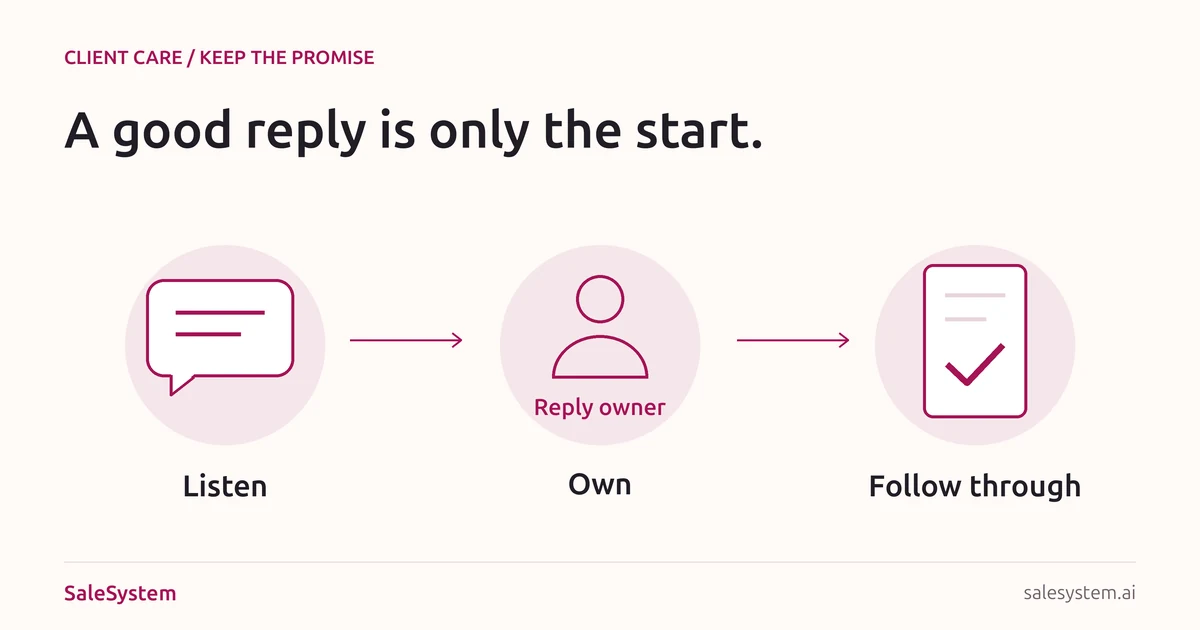
Separate three moments: heard, agreed, done. “Heard” means someone has read the concern. “Agreed” means the next action is clear. “Done” means that action actually happened and the guest was updated.
Example: a charge question crosses a shift
A massage guest texts that their receipt includes an add-on they did not expect. The evening desk thanks them, saves the exact question and names the manager who will check it. The task stays open.
The next morning, the manager checks the receipt and booking notes, then explains the findings to the guest. If a correction is approved, staff carry it out and confirm the result. If the charge is correct but still disputed, the manager explains the next review step. Neither case is closed just because the first apology was sent.
SaleSystem spa software keeps calls, texts, client notes and staff tasks together. Your next shift can find the promise and act on it without asking the guest to start over.
A short note that carries the fix across shifts
Use one note in the approved client record. Keep facts separate from guesses, and give the action to a person rather than “the desk.”
Concern: [What the guest says went wrong]
Facts checked: [Booking, receipt or conversation reviewed]
What the guest wants: [Their requested outcome]
Next action: [What we agreed to do or still need to check]
Owner: [Named teammate and backup]
Reply due: [Day, time and agreed contact method]
Approval: [Who approved an exception, if needed]
Status: [Heard, agreed or done]
Complete when: [Action finished and guest updated]
A request for a refund is not an approved refund. A promised callback is not a completed callback. Keep that difference visible so no one has to guess at closing time.
Add open concerns to your front desk shift handoff. If the fix includes another appointment, use the rescheduling confirmation checklist before saying it is booked.
What if the complaint is in a public review?
Keep the public reply brief. Offer a real business contact for private help. Do not post visit history, payment details or staff notes to argue your side. A med spa should follow its privacy process and avoid confirming that a reviewer is a patient.
Thank you for sharing your concern. Please contact [Manager] at [Business Contact] so we can listen and help privately.
Offer help without asking the person to change or delete the review. Keep complaint handling separate from your review request plan; an honest review should not depend on whether a guest is happy.
Before you mark the concern complete
- The guest’s actual concern has been answered.
- The agreed action has happened, not just been promised.
- Any booking, charge or credit change has been checked.
- The guest received a clear update through the agreed channel.
- Any remaining question has an owner and reply time.
- The note records facts without blame or private details copied into the wrong place.
A client may still be unhappy after a fair review. Record the outcome honestly. “Action completed, client disagrees” is clearer than “happy client” when that is not what they said.
At the next team meeting, look for a problem you can prevent. Repeated add-on questions may call for clearer prices. Repeated late starts may call for a booking change. Fix the cause, not just the wording of the next apology.
Give client care a shared home
Use spa client management software to keep the conversation and next task within reach. SaleSystem brings calls, texts, emails and client history together, so a different teammate can still give a personal answer.
Marketing includes CRM, conversations and workflows. Add booking and payments with Operations Complete; see spa software plans. During your 14-day free trial, use a sample guest and your own team’s contact details to try a concern from first reply to completed task. Have a second teammate pick it up halfway through.
Keep the promise with the client
Try SaleSystem free for 14 days. Manage your leads, follow up with clients and book appointments in one place.