SaleSystem / Spa client retention
Spa Client Retention: Make the Next Visit Easier
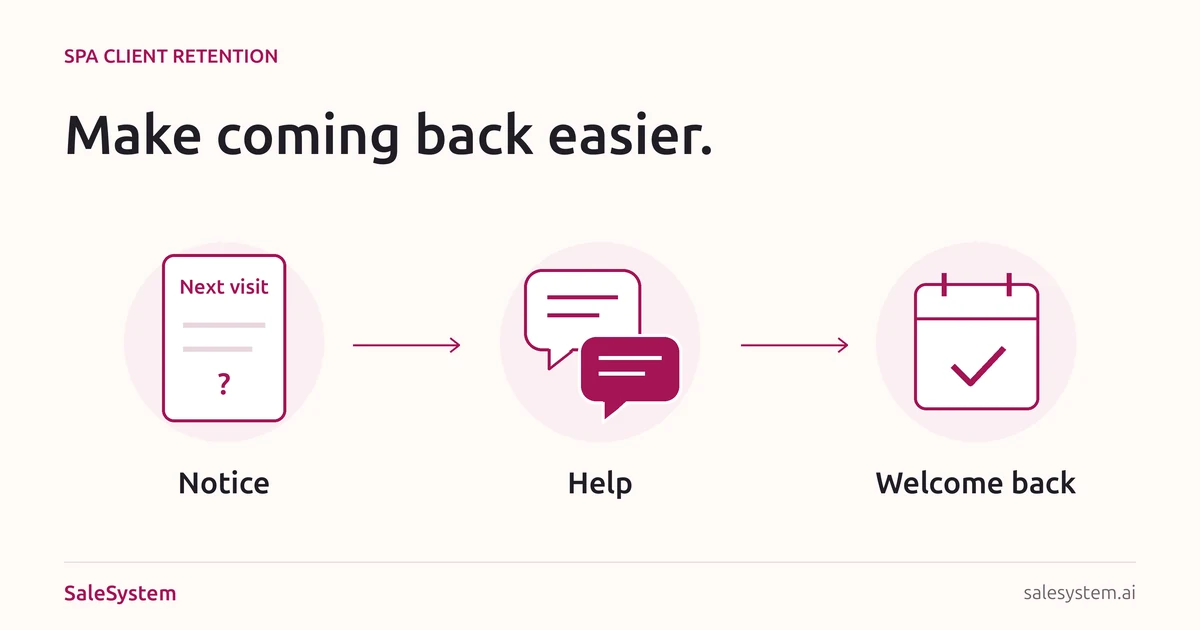
A client has not returned. Before sending a discount, find out what is in the way. These five checks help day spas turn open questions and missed next steps into a better path back.
By SaleSystem · · Marketing
Start with the visit, not the promotion
Spa client retention means keeping the relationship going so clients choose to return. A useful plan looks beyond the next sales message. Could the guest find a time? Did someone answer their question? Was the last visit worth coming back for?
Start with a small group of past guests and read what actually happened. Choose one service and a past period that gives people a fair chance to return. Separate first-time local guests, regular clients and one-off visitors. A traveler who came in once is not the same as a regular who asked for a callback.
This guide is for day spas, massage businesses and facial studios. Med spas can use the same business checks, while leaving treatment timing and medical advice to the clinical team.
Five checks before you send another offer
Is the client already coming back?
Check for a future appointment, a recent visit under another record or an open booking conversation. Do this before putting the person on a return-visit list. Someone who already booked needs a good welcome, not another “we miss you” message.
Fix: update the record and close any old task that no longer applies. If there are duplicate records, follow your team’s process to resolve them rather than guessing which history is right.
Did the client want a next step that nobody finished?
Look for a requested link, a promised callback or a question left at shift change. “I’ll call when I have my work schedule” means something different from “Please call me on Friday.”
Fix: give an agreed callback a person and a due time. For help at checkout, use our spa rebooking scripts. The aim is to finish the client’s request, not start a new sales pitch.
Could they find a time that fits?
Read requests for evenings, a certain provider or a different day. Then check the real booking path on a phone. Can a returning guest find the service and location without starting over?
Fix: offer an available choice that fits the request. If many clients ask for a time you do not offer, bring that pattern to the owner. Another coupon will not create an evening appointment.
Is there an open concern about the last visit?
A late start, unclear charge or unanswered concern may need personal help before another booking invitation. Use the facts in the record; do not assume that silence means the guest was happy or unhappy.
Fix: have the right teammate answer the concern and finish any agreed action. Our spa complaint response guide gives the team a clear way to follow through.
Does another visit fit what the client wants now?
A client may have changed plans, moved away or decided the service is not for them. Others may want to return but need a clearer idea of the price or visit options.
Fix: answer what they ask and respect their choice. If contact is allowed and a check-in makes sense, offer help without assuming they are due for a service. Use their stated preferences, not a made-up schedule.
Unknown is a useful answer
If you do not know why a guest has not returned, write “unknown.” Do not label them “too expensive,” “unhappy” or “lost” based only on an empty calendar.
Separate the client’s words from your guess. “Asked for Saturday; no suitable time” gives you something to fix. “Not loyal” does not. Keep the note brief and in your approved staff system.
Before any outreach, check contact permission, opt-outs, recent replies and current bookings. An old visit is not permission for every future promotion. For a return-visit email to an eligible audience, use our spa email examples and send checklist.
Example: the problem is the calendar, not the price
A facial guest says at checkout that weekday mornings no longer work. They ask the desk to check for a Saturday opening. The request stays in a paper note, and nobody calls back.
A month later, the guest appears on a list of people who have not returned. Sending a discount would miss the point. The useful next step is to check the request, look for a real time that fits and have one teammate follow up through the agreed channel.
If there is no suitable opening, say so and ask whether the guest wants to hear about a future one. Do not promise a slot. If the same request keeps appearing, the owner can review the schedule rather than rewriting the promotion.
SaleSystem spa marketing software keeps client history, conversations and staff tasks together so that request is easier to find and finish.
A weekly client retention review sheet
Pick one person to lead a short review. Use this sheet to turn what you find into a small, clear fix. Keep client-level details inside your approved system.
Group reviewed: [Service, first-time or regular guests, visit dates]
Reviewed on: [Date and owner]
Already returned or booked: [Checked and removed from follow-up]
Open client request: [What they actually asked for]
Reason given for not booking: [Client’s words, or unknown]
What got in the way: [Time, unanswered question, visit concern or other fact]
Next useful action: [Specific help or no contact needed]
Action owner and due date: [Person and date]
Contact check: [Agreed channel, permission and recent messages checked]
Result: [Answered, booked, attended, declined or still open]
One team fix: [What to change for the next guest]
Bring unfinished actions into your front desk handoff. Keep the review focused: one real problem fixed is more useful than a longer list of people to message.
A booking is not a return visit
Track three separate outcomes: the client received the help they asked for, they booked, and they attended. A saved appointment can still be canceled or moved. A completed reply can be good service even if the person decides not to book.
For a simple return-visit check, count the people in your chosen group who attended another visit within the period you chose. Compare that with the total people in that same group. Keep the service, group and length of time the same when comparing results.
Do not compare clients from last week with clients who have had months to return. Small groups can swing quickly, so read the conversations alongside the count. Use the review to choose the next useful fix, not to pressure staff into unwanted bookings.
Make returning feel personal
A familiar answer and an easy booking can be a better reason to return than a new discount. SaleSystem brings calls, texts, emails, client history and follow-up tasks into one place, so your team can pick up where the last conversation ended.
Explore spa marketing for the bigger plan or spa software for your front desk. Marketing includes CRM, conversations and workflows; the Operations Complete add-on brings booking and payments. See spa plans.
During your 14-day free trial, try one callback with a sample guest and contact details your team controls. Have another teammate find the request and finish the task. Make sure the next visit does not depend on who happens to be at the desk.
Keep the next visit within reach
Try SaleSystem free for 14 days. Manage your leads, follow up with clients and book appointments in one place.